
How to Detect a Cycle in a Linked List?
Posted by Admin on April 6, 2026
Efficient data management is essential in modern computing, and understanding how to identify structural issues within data is critical for developers and IT professionals. One common problem in programming is identifying loops within a linked list. This concept, often referred to as Linked list cycle detection, plays a vital role in ensuring data integrity and preventing infinite loops in applications.
This blog delivers a clear and structured explanation of how to Detect cycle in linked list, highlighting proven techniques and practical insights aligned with industry standards.
Understanding Data Structures Linked List
A linked list is a fundamental concept in programming where elements are connected through pointers rather than stored in contiguous memory locations. In Data structures linked list, each node contains data and a reference to the next node.
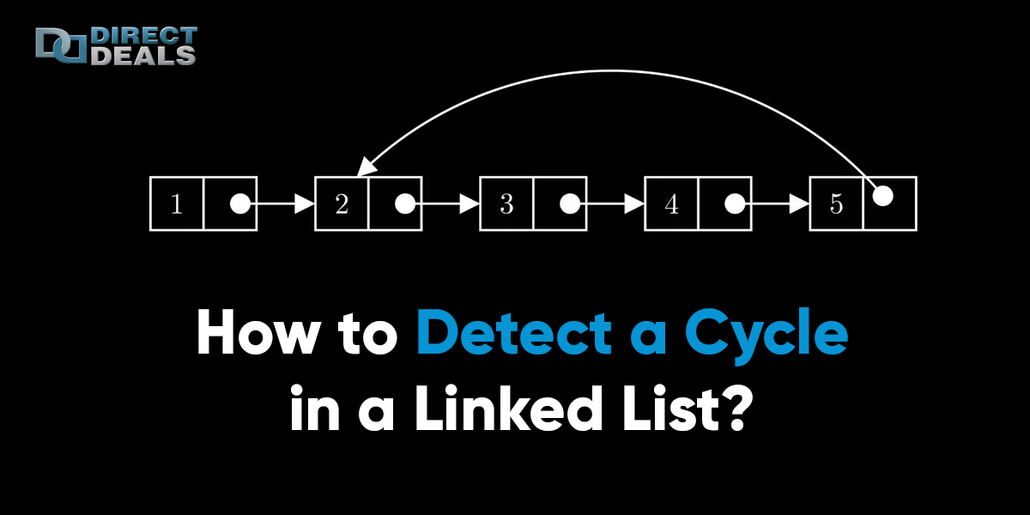
While this structure offers flexibility, it can also introduce issues such as cycles. A cycle occurs when a node points back to a previous node, creating a loop that can cause programs to run indefinitely if not handled properly.
What is a Cycle in a Linked List
A cycle in a linked list means that traversing the list will never reach a null value. Instead, the traversal continues endlessly because the last node connects back to an earlier node.
Understanding how to Detect cycle in linked list is essential for developers working with dynamic data structures, as it helps prevent performance issues and application failures.
Common Approaches for Linked List Cycle Detection
There are multiple ways to identify cycles, but one of the most efficient and widely used techniques involves pointer traversal.
Using Floyd’s Algorithm
Floyd’s algorithm is a well known method for detecting cycles in linked lists. It uses two pointers moving at different speeds through the list.
This approach is often referred to as the Tortoise and Hare algorithm, where one pointer moves one step at a time and the other moves two steps. If a cycle exists, both pointers will eventually meet at the same node.
How the Tortoise and Hare Algorithm Works
The Tortoise and Hare algorithm operates on a simple principle:
- Initialize two pointers at the head of the list
- Move the slow pointer one step at a time
- Move the fast pointer two steps at a time
- If both pointers meet, a cycle exists
- If the fast pointer reaches the end, no cycle is present
This method is highly efficient and does not require additional memory, making it a preferred solution in most scenarios involving Linked list algorithm implementation.
Why Cycle Detection Matters in Real Applications
Cycle detection is not just a theoretical concept. It has practical importance in various applications:
- Preventing infinite loops in software execution
- Ensuring proper memory usage
- Validating data structure integrity
- Supporting debugging and performance optimization
Organizations relying on complex systems benefit significantly from implementing robust Linked list cycle detection strategies.
Performance Considerations
The efficiency of any Linked list algorithm depends on time and space complexity.
Floyd’s method operates in linear time complexity and uses constant space. This makes it highly suitable for large datasets where performance is critical.
Compared to alternative methods that require additional data structures, this approach provides a balanced solution between speed and resource utilization.
DirectDeals Services for Technology Solutions
DirectDeals has been trusted by businesses for 27+ years, delivering reliable and scalable technology solutions tailored to organizational needs. Services include:
- Enterprise software solutions and consultation
- IT infrastructure optimization
- Cloud integration strategies
- Data management support
- Technical assistance for seamless deployment
Conclusion
Understanding how to identify cycles in linked lists is essential for maintaining efficient and reliable systems. Techniques such as Floyd’s algorithm provide a proven and effective approach to solving this problem with minimal resource usage. The ability to detect loops ensures better performance, improved debugging, and stronger data structure management.
DirectDeals stands as a trusted authority in delivering technical knowledge and solutions that empower businesses to optimize their systems. With decades of industry experience, the brand continues to support organizations in adopting efficient programming practices and robust technology strategies that align with modern business demands.
Discover reliable technology solutions designed to support business growth and operational efficiency. Get in touch with our experts to explore the right tools and strategies for your organization.
(800) 983-2471 | support@directdeals.com | www.directdeals.com