
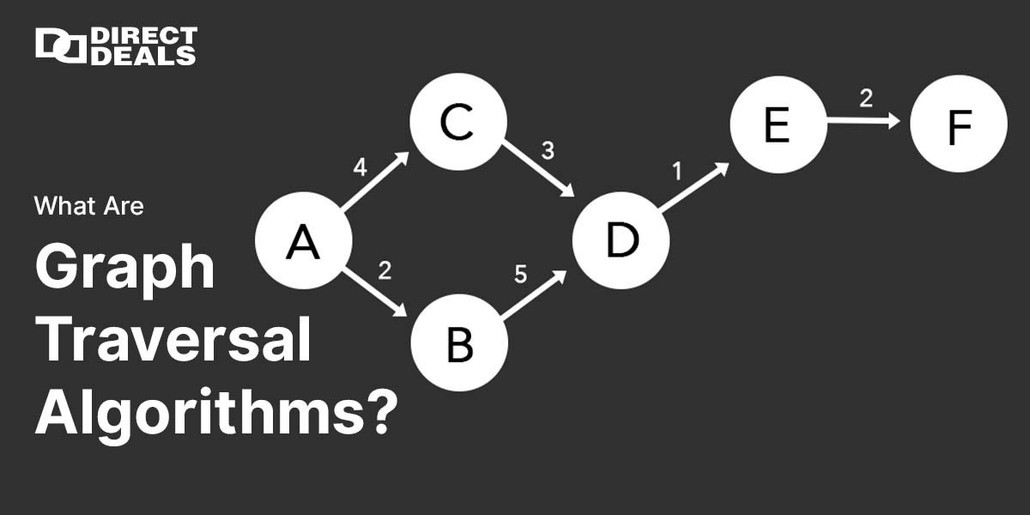
What Are Graph Traversal Algorithms?
Posted by Admin on March 13, 2026
In the realm of data structures and computer science, graphs are used to represent networks of connected data. Whether it's your social media feed, Google Maps, or file system hierarchy, graphs are behind the scenes, working silently to connect the dots. But how do systems actually navigate through such complex structures?
This is where graph traversal algorithms come into play.
Understanding Graphs
Before diving into traversal, let’s understand what a graph is. A graph consists of nodes (also called vertices) and edges (connections between nodes). Depending on the nature of the data and the direction of relationships, graphs can be directed or undirected, weighted or unweighted.
What Are Graph Traversal Algorithms?
Graph traversal algorithms are a set of techniques used to systematically visit all the nodes and edges of a graph. These algorithms are crucial in many fields ranging from AI pathfinding, computer networking, and databases to real world applications like transport routing and web crawling.
Two fundamental methods for traversing graphs are:
1. Breadth First Search (BFS)
BFS begins at the starting node and explores all of its immediate neighbors first, before moving to the next level of nodes. It uses a queue data structure and ensures that the shortest path (in terms of number of edges) is found in an unweighted graph.
Key Characteristics
-
Explores neighbors before children
-
Uses FIFO (First In First Out) queue
-
Ideal for shortest path discovery
Practical Applications
-
Social networking (finding people within X degrees of separation)
-
Web crawlers (scanning pages level by level)
-
GPS navigation systems
2. Depth First Search (DFS)
DFS, in contrast, explores as far as possible along one branch before backtracking. It uses a stack (or recursion) and dives deep into the graph.
Key Characteristics
-
Explores children before neighbors
-
Uses LIFO (Last In First Out) stack or recursive calls
-
Great for cycle detection and solving puzzles
Practical Applications
-
Detecting cycles in graphs
-
Solving mazes or game trees
-
Scheduling tasks using topological sort
Real World Importance
Why should one care about graph traversal? Because in the modern digital world, data is increasingly interconnected. Traversing graphs efficiently can:
-
Enhance recommendation systems (think: Netflix, Amazon)
-
Improve search engines
-
Detect fraud in banking systems
-
Optimize communication networks
In fact, any application where relationships matter whether between friends, devices, routes, or datasets relies on graph traversal for performance and accuracy.
Conclusion
Graph traversal algorithms like BFS and DFS form the backbone of efficient data processing in graph based systems. They are not just theoretical concepts but powerful tools that solve real world problems every day from routing your cab to suggesting the next song on your playlist.At DirectDeals, we are passionate about powering such innovations. With 27+years of trust in delivering top notch software, licensing solutions, and server products, we help organizations and developers build systems that matter.Whether you’re working on backend systems that need to analyze graphs, or you're just exploring algorithms for academic purposes, know that DirectDeals is your partner in performance and reliability. Our products and solutions are engineered to support your technology goals, making sure you’re never limited by your tools.
Contact DirectDeals
Need expert advice or the best deals on licensed software and systems built for performance?
Website: www.directdeals.com
Email: support@directdeals.com
Phone: +1-800-983-2471
DirectDeals 27+ Years of Trust
Empowering tech professionals, businesses, and developers with cutting edge solutions since 1998.