
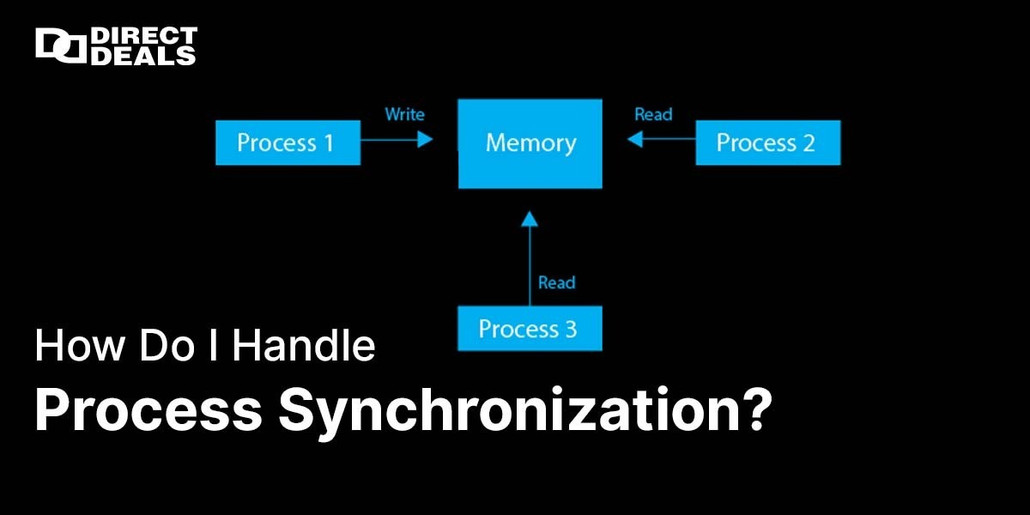
How Do I Handle Process Synchronization?
Posted by Admin on March 5, 2026
When it comes to managing multiple processes in any system, process synchronization is absolutely essential. Without it, you could end up facing deadlocks, race conditions, data inconsistency, and many other headaches. Whether you're a software developer, a system architect, or just a curious tech enthusiast, understanding how to handle process synchronization properly is key to building reliable systems. At DirectDeals, with 27+years of trust in delivering quality solutions to our clients, we often get asked about best practices in handling these complex issues. So today, let’s break it down into simple, practical steps.
What Is Process Synchronization?
In simple terms, process synchronization refers to coordinating the sequence of processes so that they don’t interfere with each other while sharing resources like memory, files, databases, etc. It ensures that when multiple processes access shared resources, the system behaves predictably and consistently.
How Do I Handle Process Synchronization?
Here’s a straightforward guide to managing process synchronization effectively:
1. Use Semaphores
Semaphores are simple signaling mechanisms. They help processes know when they can enter a critical section (the part of the program where shared resources are accessed) and when they must wait. Think of it like a traffic light that ensures one car moves at a time.
Example:
In a server application, semaphores can control how many clients connect simultaneously without overloading the server.
2. Implement Mutexes (Mutual Exclusion Objects)
A mutex ensures that only one process accesses a critical section at a time. It’s like locking a door once someone enters, others have to wait until it’s unlocked.
Example:
If two users are trying to update the same database record, a mutex can make sure one finishes the update before the next one starts.
3. Use Monitors
Monitors are high level synchronization tools found in object oriented programming languages like Java. They automatically manage locks and condition variables, making your life easier.
Example:
In a banking app, monitors can ensure that balance transfers don’t lead to errors if two transfers happen at the same time.
4. Leverage Message Passing
Instead of shared memory, you can design your system to pass messages between processes. This way, synchronization issues can be reduced because processes don't directly touch shared resources.
Example:
In microservices architecture, services communicate through REST APIs or messaging queues, avoiding direct memory sharing.
5. Adopt Synchronization Libraries and Frameworks
Sometimes, the best approach is to rely on tried and tested libraries rather than building from scratch. Tools like pthreads (POSIX threads), OpenMP, or even Java’s synchronized keyword make implementing synchronization much more manageable.
Conclusion
Handling process synchronization is all about careful management, choosing the right tools, and understanding the flow of processes in your system. With the proper methods semaphores, mutexes, monitors, or message passing you can build reliable, efficient, and safe systems.
At DirectDeals, we understand the complexity behind the scenes. That's why for over 27+years of trust, businesses have turned to us for their tech needs, from software solutions to IT consulting. If you have any questions about synchronization, system architecture, or any technology needs, we are here to help!
Contact Details:
Phone: +1 (800) 983-2471
Email: support@directdeals.com
Website: www.directdeals.com
Let us help you build systems that are not just powerful but perfectly synchronized too!